
If you attended Johnny’s Ambassadors Founder & CEO Laura Stack’s training session at CADCA’s 25th Annual Mid-Year Training Institute this year, you likely left with the same unsettling question that seemed to hang in the air: how did we get here? Here, meaning a place where the average potency of THC products has skyrocketed from roughly 2% in the 1980s to 20% for standard dispensary marijuana today, with concentrates averaging 60% THC or higher.
Stack’s session and presentation laid out the science clearly. The developing adolescent brain is uniquely vulnerable to THC, and the products available to young people today are not the same marijuana their parents may have encountered decades ago. But she also told the story of her son Johnny to help us understand why this science matters so urgently.
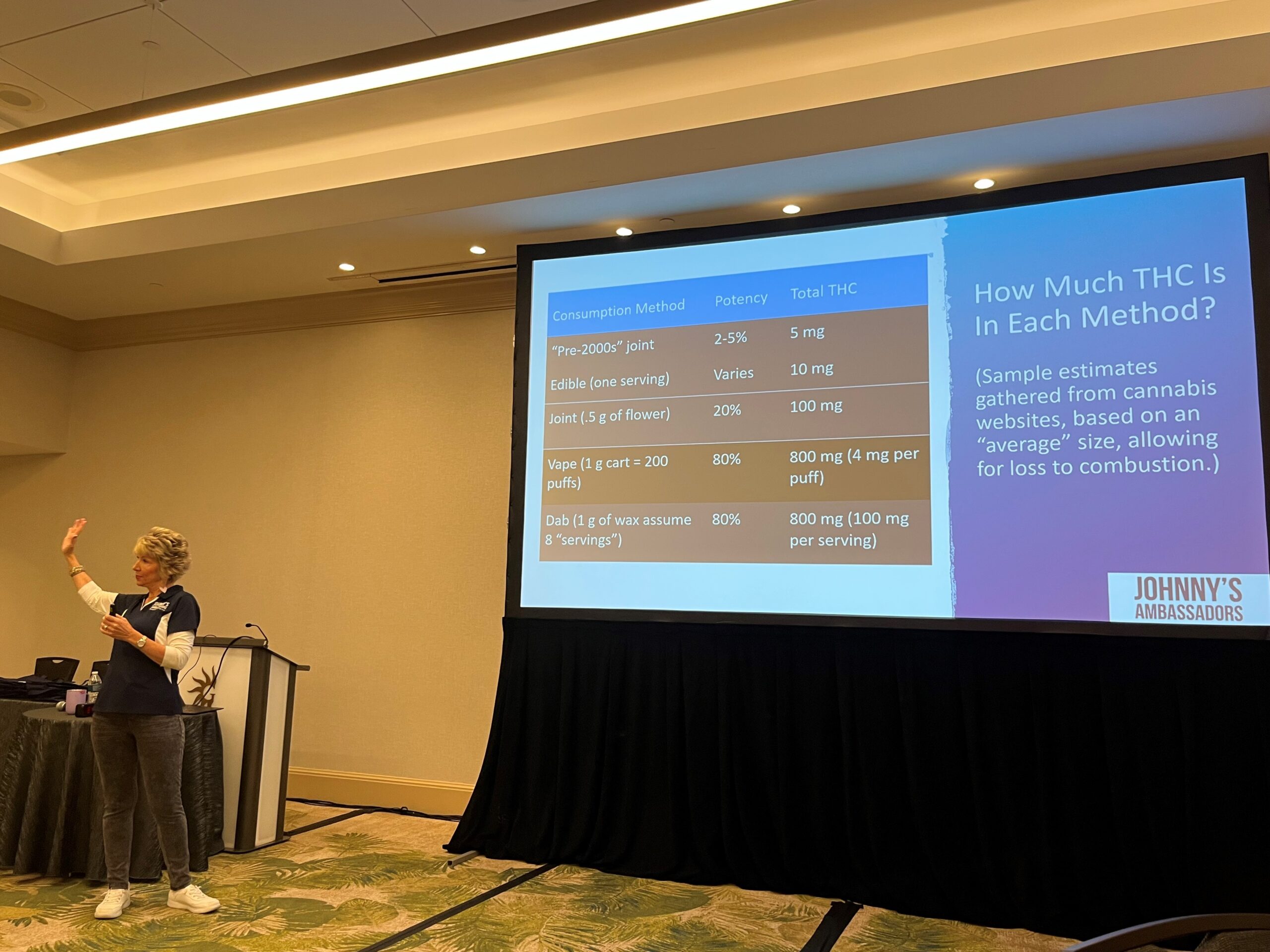
In the pre-2000s, a typical joint contained about 5 mg of total THC. Today, a single joint contains roughly 100 mg. A vape cartridge can deliver 800 mg across 200 puffs, or about 4 mg per inhalation. A 1 g dab of wax delivers 800 mg into eight servings of 100 mg each. The fact is that cannabis products are much more potent now than before.
SAMHSA’s 2024 National Survey on Drug Use and Health reinforced how serious this has become. Of the 2.947 million teens aged 12-17 who used marijuana in the past year, 44.38% had cannabis use disorder. That’s 1.3 million young people struggling with dependence.
Johnny Stack was a healthy teenager with no genetic predisposition to mental illness. He had his whole life ahead of him. In 2013, when Colorado legalized marijuana and dispensaries opened, he was 14. At a high school party, he used cannabis for the first time. He was honest with his parents about it, even mentioning the peer pressure he’d felt. That honesty marked the beginning of five years of struggle: mental hospital stays, cannabis withdrawals, anxiety so severe he’d jump out of his skin, insomnia, and irritability.
Stack continued to explain that THC affects the development of the brain and is more harmful for young people as the brain development process is happening. THC molecules are so structurally similar to anandamide, a naturally occurring neurotransmitter, that the brain can’t tell them apart. THC binds to CB1 receptors throughout critical regions of the developing brain:
- Prefrontal cortex (executive function & higher reasoning)
- Nucleus accumbens (reward circuit)
- Amygdala (emotions, fear, anxiety)
- Hippocampus (learning new information)
- Orbitofrontal cortex (motivation and drive)
- Basal ganglia (planning and starting movement)
- Cerebellum (motor skills, balance)
Because THC is fat-soluble, it lingers in the brain for up to four weeks.
A 2021 study in JAMA Psychiatry scanned the same participants at ages 14 and 19, comparing brain structure before and after exposure to cannabis. Even after just one or two uses, researchers documented measurable thinning in the prefrontal cortex. Every exposure to cannabis causes physiological changes.
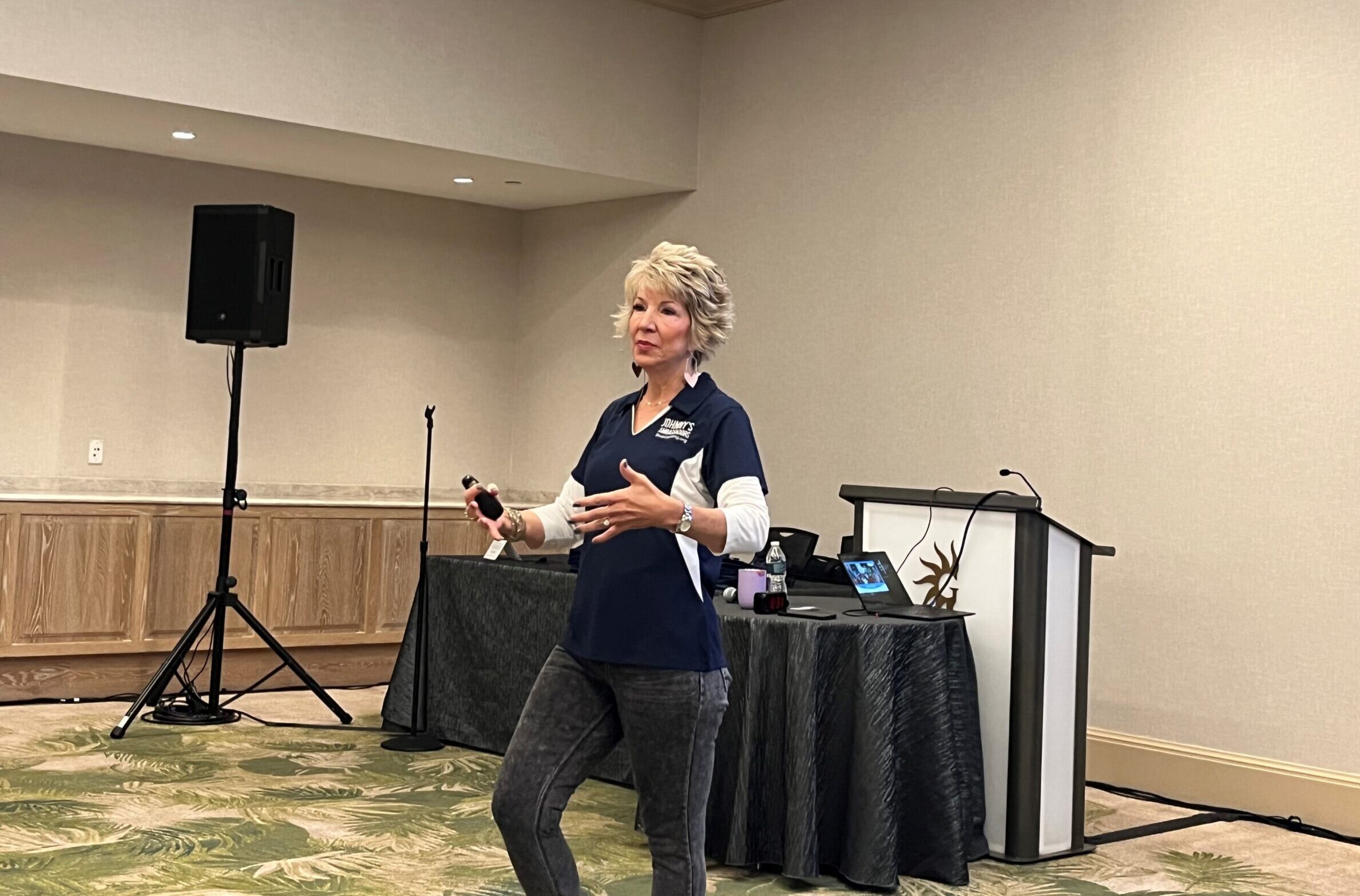
Between the ages of 14 and 16, the changes in Johnny were gradual. He dropped out of sports. He stopped wanting to go to church, stopped playing piano and guitar. His friend group changed. He pulled away from school, despite maintaining straight A’s. He told his mom it wasn’t hurting him, but his brain was changing in ways neither of them could see.
Stack also addressed the broader health consequences young people face with regular THC use: cardiovascular risks including increased heart rate and stroke risk, lung damage from smoking and vaping, gastrointestinal complications, and impacts on reproductive health and fertility.
At 17, everything shifted for Johnny. He became defiant, hostile, and withdrawn. At 18, he moved out and obtained a medical marijuana card. Then came the psychosis.
Her presentation focused on the ties between cannabis use and psychosis. Research analyzing data on millions of people over decades suggests that as many as 30% of schizophrenia cases may be linked to cannabis use. Canadian and Danish public health data show similar concerning trends. And the risk of psychosis appears independent of genetic predisposition. Regular high-potency cannabis use is itself a strong predictor of psychotic disorder.
In 2019, Johnny became convinced that people were watching him. At a restaurant, he’d insist everyone was talking about him. His journals documented paranoid thinking that spiraled further. Johnny is unfortunately no longer here with us and died by suicide after five years of battling the effects of high-potency marijuana use.
To quote Stack, “There is never a time where it is hopeless or helpless or too late.” As prevention professionals, we carry the responsibility to help young people and families understand what the science tells us. Teen THC use today is categorically different from the past, that the developing brain faces genuine risk, and that the products available are far more dangerous than many realize. Johnny’s story is why we do this work.



 English
 Spanish
 French
 Russian
 Portuguese