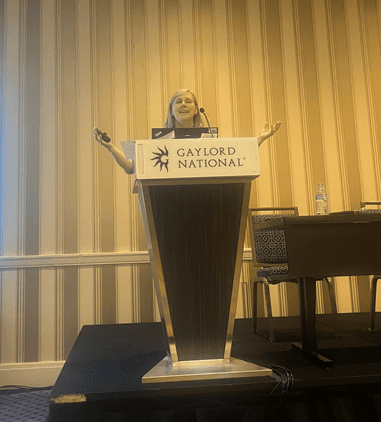
At CADCA’s National Leadership Forum, a training session titled, “SAMHSA Session: Beyond Good Intentions: What Doesn’t Work in Prevention” challenged attendees to rethink some of the most common prevention activities that many of us have relied on for years. Led by Kris Reed, MPH, CPS of the Great Lakes PTTC, the session revealed a tough truth: some well-intentioned prevention strategies can actually cause harm.
Reed kicked off the conversation by sharing what primary prevention looks like in other fields; think sunscreen for preventing sunburns or immunizations to prevent disease. The goal is to put effective measures in place before a problem starts, not react after the fact. Prevention science gives us a continuum of evidence, from well-supported strategies to those shown to be ineffective or harmful, and it’s on us as prevention experts to know the difference.
A big takeaway was the importance of the Strategic Prevention Framework and data-driven planning. What does your community actually need? What is it ready for? Do you have the capacity to implement something long-term and developmentally appropriate? Good intentions aren’t enough if prevention strategies aren’t grounded in evidence.
During the session, Reed walked through several popular approaches that research shows are ineffective. One-time school assemblies, personal testimonies, mock car crashes, and “drunk” goggles may be memorable and easy to organize, but they have little to no lasting effect. Some approaches, like the mock car crashes, can be traumatizing, and others, like the drunk goggles, can unintentionally increase curiosity about substance use. Fear-based messaging and exaggerated claims about how “everyone is using” can also backfire, especially when young people’s real-life experiences don’t match what they’re being told.
Reed also covered knowledge-only approaches, like drug fact sheets or myth-busting campaigns. Simply providing information about substances without context does not change behavior and can even sometimes spark unintended interest. Similarly, punitive policies such as zero-tolerance discipline in schools don’t address underlying issues and may increase risk factors by disconnecting youth from school and trusted adults.
So, what does work? Effective strategies focus on building skills, strengthening protective factors, and delivering age-appropriate education over time. Social-emotional learning in schools, parenting programs that help adults communicate with youth, long-term campaigns with clear audiences, and interactive approaches that let young people practice real-life skills all show stronger outcomes. Media efforts that reinforce positive norms, like the fact that most youth are not using substances, are also more effective than scare tactics.
The session also centered on why ineffective strategies continue to take place. Often, it’s because they’re familiar or well-liked. Sometimes, partners are reluctant to change, or there are concerns about cost and capacity. Occasionally, people stick with a strategy simply because they believe it “worked for them,” even if it’s not grounded in research.
Reed offered a practical five-step approach for moving communities towards better solutions:
- Understand why people are invested in the current strategy.
- Identify evidence-based, effective alternatives that can be implemented instead.
- Highlight how change benefits stakeholdersor others invested in the ineffective strategy.
- Craft a persuasive message to embrace replacing the ineffective strategy.
- Be prepared for a long game. It could take a year, two months, or even multiple years to implement a new strategy.
If this session sparked ideas for your community, CADCA’s Mid-Year Training Institute will offer even more hands-on learning and practical tools this July. Stay tuned for registration details in the coming month.