
At the 2026 Mid-Year Training Institute, one session tackled a question that every coalition eventually runs into: how do you actually know if your prevention work is making a difference?
The answer, according to the panel of CDC and ICF evaluation experts who led “Collecting Local Evaluation Data: Lessons Learned from the Field” comes down to one thing: good local data. Over 90 minutes, the panel walked attendees through why local data matters, what the national numbers show, how to collect data that holds up over time, and how to work through roadblocks that come up along the way.
Julie Guarnizo, CDC DFC Team Lead, opened the session with a reminder that’s easy to nod along to and hard to actually practice: good intentions don’t prevent substance use. Good decisions do, and good decisions start with data that reflects what’s actually happening in your community, not a generic, one-size-fits-all picture of youth substance use.
Substance misuse doesn’t look the same from one community to the next, and neither do the solutions. Guarnizo emphasized that coalitions need to identify the specific areas where local youth are struggling most, understand the risk and protective factors unique to their community, and ask why certain groups of youth are being disproportionately impacted. Without that local lens, prevention strategies risk missing the populations and problems that need attention most.
Data isn’t just a box to check for funders, either, though it certainly helps there too. Guarnizo pointed out that good data does several things at once: it guides decisions and actions aimed at improving health and youth outcomes, helps coalitions understand whether their programs and policy changes are actually working, builds trust and support within the community by giving coalitions something concrete to point to, and strengthens funding requests like grant applications.
The coalitions seeing the biggest impact, she noted, aren’t just collecting data for the sake of it. They’re asking better questions, actively interpreting what they find, leaning on the expertise already sitting around the coalition table, and shaping their programming around what the data actually shows.
Jason Stanford, DFC Project Director at the CDC, shifted the conversation from the “why” to the “what,” sharing what the data shows across the Drug-Free Communities program nationally. DFC coalitions are required to participate in a National Cross-Site Evaluation and report on four core measures: past 30-day use, perception of risk, perception of parental disapproval, and perception of peer disapproval.
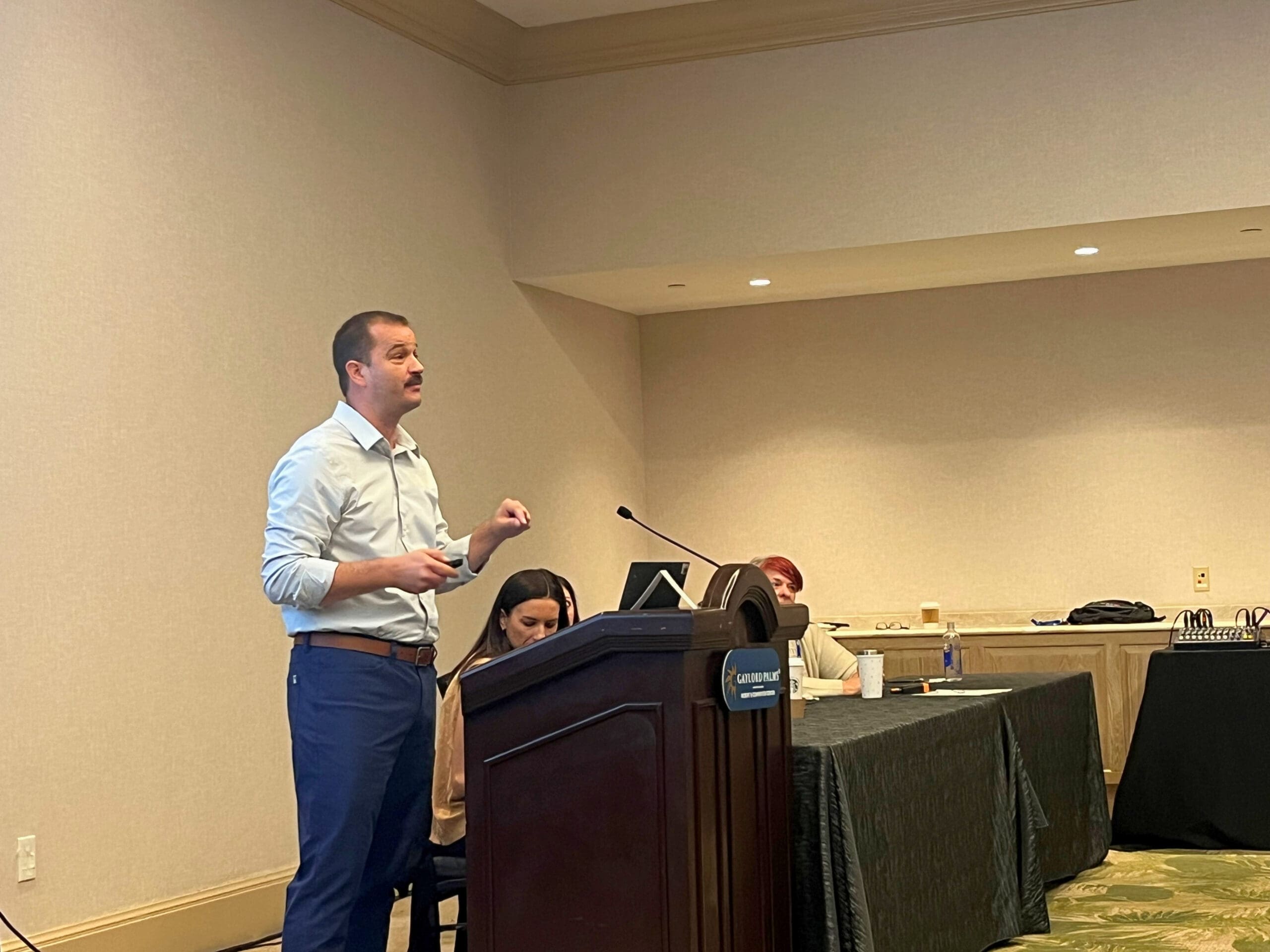
Since the program’s inception in 2002, DFC funding has been associated with measurable declines in past 30-day substance use among middle and high school-aged youth, comparing each coalition’s first report to its most recent one. Among high school students specifically, the declines break down as follows:
- 39% decrease in prescription drug misuse
- 34% decrease in tobacco use
- 25% decrease in alcohol use
- 15% decrease in marijuana use
Those are the kinds of numbers that make the case for prevention funding on their own. But Stanford was clear that the data alone isn’t enough. “The numbers tell the story,” he told attendees, “and you have to be able to tell your story when you’re talking to us.” In other words, coalitions still need to be able to translate the data into a narrative that connects the dots for funders, school partners, and the community.
Kelly Cooley, an Evaluation Specialist with ICF, walked through recent evaluation findings before turning to the practical side of the session: how coalitions can collect strong local data, and where they tend to run into trouble.
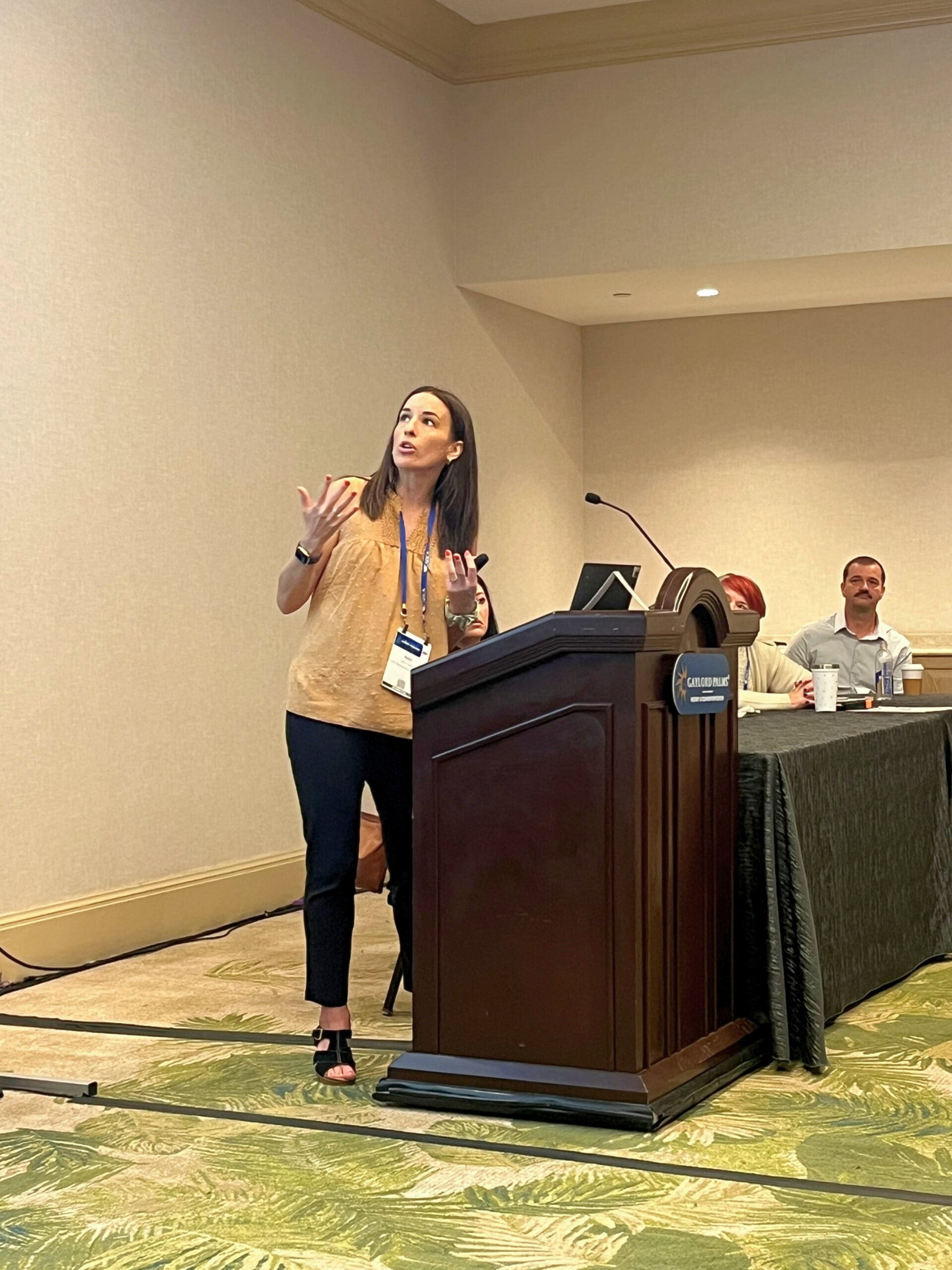
Cooley reinforced that local data helps communities answer questions no national dataset can: To what extent are youth in this community drug-free, and what substance use concerns are most pressing here? What factors are contributing to the issue locally? What strategies actually fit this community? And, over time, are conditions changing?
On the findings side, preliminary data shows that most middle and high school youth report making drug-free choices in the past 30 days, and most DFC coalitions report at least some level of decrease in use compared to no change or an increase. Within DFC communities specifically, there have been significant declines over time in past 30-day use of alcohol, marijuana, and prescription drugs among both middle and high school youth.
Barbara O’Donnell followed with considerations for high-quality data collection, and her core message was that consistency is everything. That means:
- Keeping a regular cadence. Collect data at least every two years, at roughly the same time of year, from the same grade levels and schools over time. The key question to ask: are your data collection methods introducing other possible explanations for change, beyond your prevention work itself?
- Using comparable surveys and core measures. Stick with the same surveys and the same core measure wording from year to year and administer them using similar procedures. Document any changes, since they can affect how results should be interpreted. The question to keep coming back to: can we confidently compare this year’s data to last year’s?
- Prioritizing representation. Data needs to reflect the population a coalition is actually serving, not just the youth who are easiest to reach. That means avoiding samples drawn from only certain groups, collecting in a school setting where possible to improve representation, and regularly reviewing participation and response rates. The question here: who is represented in this data, and who might be missing?
Just as important as the methodology, O’Donnell noted, is the relationship-building behind it. The key to having good data is investing in partnerships with state agencies, schools, and community partners before a challenge arises, not after. That means maintaining those relationships consistently, regularly communicating appreciation to the people supporting data collection efforts, and following through on commitments about how the data will be used and shared.
She was candid that this work rarely moves in a straight line. No single solution works to overcome every challenge, or in every community, and progress usually requires sustained effort and ongoing relationship-building. Her advice for coalitions navigating a slow “no”: hear it as “maybe, but not now.” If you keep showing up and putting in the work, the relationship eventually moves forward. And when a “yes” does come, take it as the win that it is.
The session closed with a detailed rundown of the challenges coalitions run into most often when collecting evaluation data, organized into four categories, along with concrete ways to work through each one.
School and community buy-in. This bucket covers everything from maintaining parent-school relationships and navigating survey mistrust, to coalition visibility and staff or leadership turnover. The panel’s recommended approach: stay engaged with schools year-round rather than only reaching out around data collection season, and lead with how the coalition can support the school, not just what the coalition needs from it. Identifying the right contacts and champions within each school, and building relationships with more than one of them, helps protect against disruption when staff turn over. Demonstrating value beyond the data itself matters too. That can look like providing guest speakers for classes or events, chaperoning school events, offering evidence-based curricula and prevention resources, or creating youth leadership and mentorship opportunities.
Consent and policies. Data privacy concerns, survey content pushback, opt-in and parental consent requirements, and varying school, state, and local survey policies all fall here. The fix starts with understanding requirements early: working with schools to learn district, state, and local survey requirements, and identifying approval processes and timelines before data collection begins. From there, coalitions should be transparent about how data will be collected, protected, and shared, and be ready to explain why specific questions are included in a survey, including being willing to omit a question if that’s what it takes to get school approval. Building consent into existing school communication channels, using multiple reminder touchpoints like email, PTA meetings, and word of mouth, and leaning on existing state or district-administered surveys that already meet policy requirements can all lighten the lift.
Administration and logistics. Time constraints, scheduling and coordination headaches, data timelines and access, and the mechanics of survey administration all live in this category. The panel’s advice is to plan early and coordinate often: align data collection with the school calendar, identify key deadlines and responsibilities well ahead of time, and make data collection a standing agenda item with school partners rather than a once-a-year scramble. Staying flexible when barriers arise, and understanding realistic timelines for accessing data, rounds out this piece. On setting: schools remain the best environment for collecting representative youth data, though afterschool programs, rec centers, youth summits, and faith-based youth groups can serve as alternative settings when needed. Web-based surveys distributed through schools, coalition partners, or youth networks can also help expand reach, though coalitions should weigh how an alternative setting might affect representation and how results should be interpreted.
Representation and data quality. Low response rates, questions about how representative a sample really is, and consistency and comparability over time all fall under this last category. The guidance here echoes O’Donnell’s earlier point: prioritize participation from populations that reflect the youth a coalition is actually trying to understand and serve, monitor participation and response rates closely, and stay alert to who might be missing from the data.
The throughline across the whole session was clear. Local data isn’t merely a reporting requirement; it’s the foundation for smarter strategy, stronger partnerships, and a clearer story to tell about the impact prevention work is having, one community at a time. As the panel made clear, the coalitions getting the most out of their data aren’t the ones with the most sophisticated tools. They’re the ones asking the right questions, staying consistent, and investing in the relationships that make good data possible in the first place.

 English
 Spanish
 French
 Russian
 Portuguese