What does it take to choose the right prevention approach for your community and make sure it works? That was the focus of the tenth webinar in CADCA’s 18-part Competencies in Focus series, which took a deep dive into the Evidence-Informed Strategies competency.
The session featured Karen Voetsch, Branch Chief of CDC’s Drug-Free Communities Branch, alongside Zara Petković of the Center for Public Health Systems Science at Washington University in St. Louis and CADCA Trainer Kristina Clark.
Petković opened by introducing participants to the competency framework. CADCA’s Coalition Competencies span three domains: operations, community, and prevention. The evidence-informed strategies competency is defined as identifying and selecting approaches based on theory, best available research evidence and experience, documented body of knowledge, and input from informed experts. In practice, it means that coalitions aren’t just picking programs from a list; rather, they’re matching strategies to their specific context with intention.
Voetsch introduced two CDC resources designed to support coalition work: the FREE MIND Campaign and ENGAGE.
The Free Mind Campaign is a national communication campaign targeting youth ages 12-17, built around the connection between mental health and substance use. The campaign was developed through extensive research, including in-depth interviews and concept testing with teens, and features two main characters (“Toxic” and “Discomfort”) that bring key messages to life.
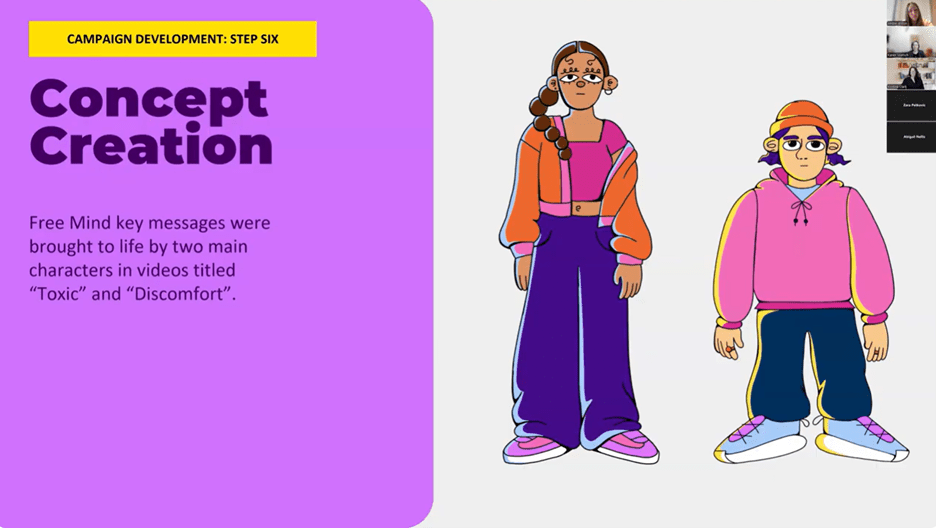
It also includes interactive tools like What’s Up With Tess?, a video game-style experience that walks teens through realistic conversations and choices, and Facts & Feels, a digital card game to help parents and caregivers have honest conversations with teens. The campaign launched to significant reach, with 600 million impressions and coverage in 4,000 news stories nationwide.
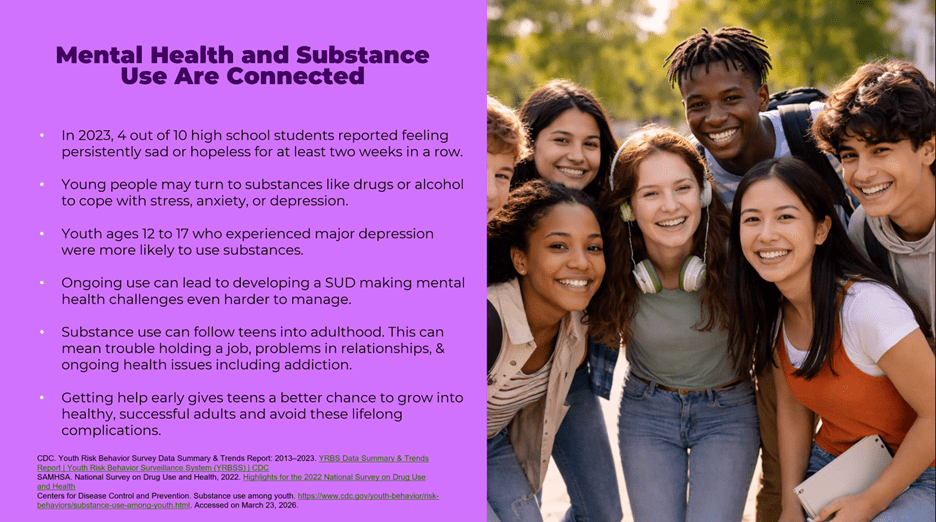
The data behind the campaign is sobering. In 2023, four out of ten high school students reported feeling persistently sad or hopeless for at least two weeks in a row. The Free Mind Campaign meets teens where they are, with messaging tailored by age and level of exposure to substance use.
ENGAGE: Evidence-Based Strategies to Prevent Youth Substance Use is a practical, evidence-based resource organized around six prevention strategies for youth under 18. To emphasize why this work remains urgent, Voetsch pointed to data from в Monitoring the Future study. Most youth drug use held steady in 2025 compared to 2024, and past 30-day abstention from alcohol, cannabis, and nicotine was 91% among 8й graders, 82% among 10й graders, and 66% among 12й graders—record or near-record levels. Overall trends are moving in the right direction, but Voetsch was clear that we can’t take our foot off the pedal. New substances like nicotine pouches are on the horizon, and many products remain highly accessible to youth. Progress is real, but the landscape keeps shifting, which is why these evidence-based programs matter.
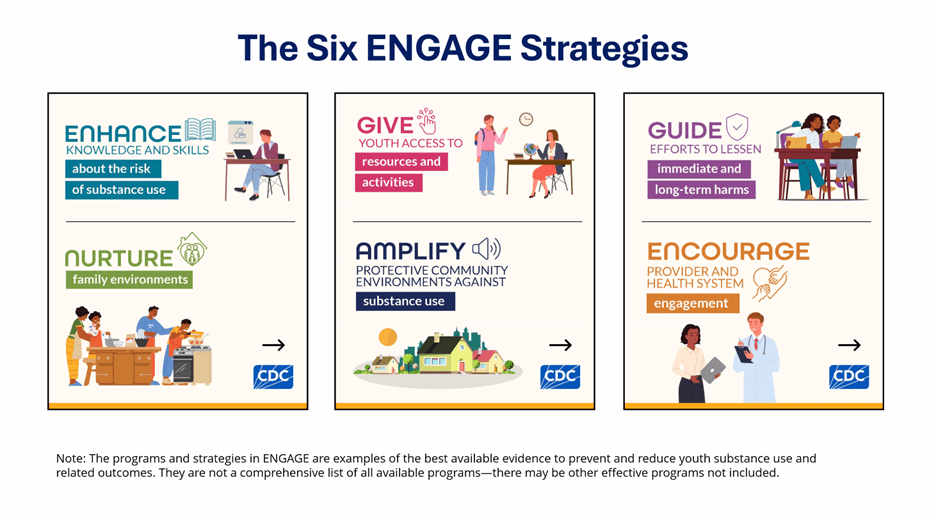
The six ENGAGE strategies are:
- Enhance knowledge and skills
When young people understand the risks of substance use and have the skills to say no, they’re better equipped to make health decisions. Programs like LifeSkills Training, Good Behavior Game, and Project Towards No Drug Abuse have shown effectiveness in reducing substance use and initiation. - Nurture family environments
Supportive and nurturing family environments can prevent substance use. Programs like the Nurse-Family Partnership, Strong African American Families, Familias Unidas, and Strengthening Families have been shown to prevent youth substance use. - Give youth access to resources and activities
Structured activities and adult supervision reduce risky behaviors. Participation in extracurricular activities and programs like Big Brothers, Big Sisters of America, and Raising Healthy Children is associated with an array of positive outcomes. - Amplify protective community environments
Community-level programs can foster healthier environments for youth to resist substance use. Initiatives like Communities that Care and PROSPER have shown success in creating environments that protect against substance use. - Guide efforts to lessen immediate and long-term harms
The risk of substance use is not evenly distributed among youth, with some youth facing higher risks. Support for youth at increased risk is critical. Programs like KEEP SAFE, Multidimensional Family Therapy, and Coping Power have effectively reduced substance use and initiation. - Encourage provider and health system engagement
Healthcare providers play a key role in prevention. Programs like the Substance Use Screening, Brief Intervention, and Referral to Treatment (SBIRT) and Bright Futures have shown effectiveness in reducing substance use.
Clark closed the session by connecting the resources to action. The ENGAGE strategies align directly with the 7 Strategies for Community Change that coalitions are already using, making integration into existing logic models a natural next step.
Her core message: this is a group project. Coalitions shouldn’t take everything on themselves. Think through which strategies align with the goals of your law enforcement partners, healthcare partners, and not just collaborators. The goal is to build community-wide capacity for prevention, not just coalition capacity.
She also encouraged coalitions to go directly to the source when thinking about outreach. Ask parents and youth where they’re getting their information (at parent nights, health fairs, or wherever they show up). That kind of direct input contributes to the success of prevention approaches.
For more insights on how to tailor these strategies to your coalition, watch the full recording here.

 English
 Spanish
 French
 Russian
 Portuguese