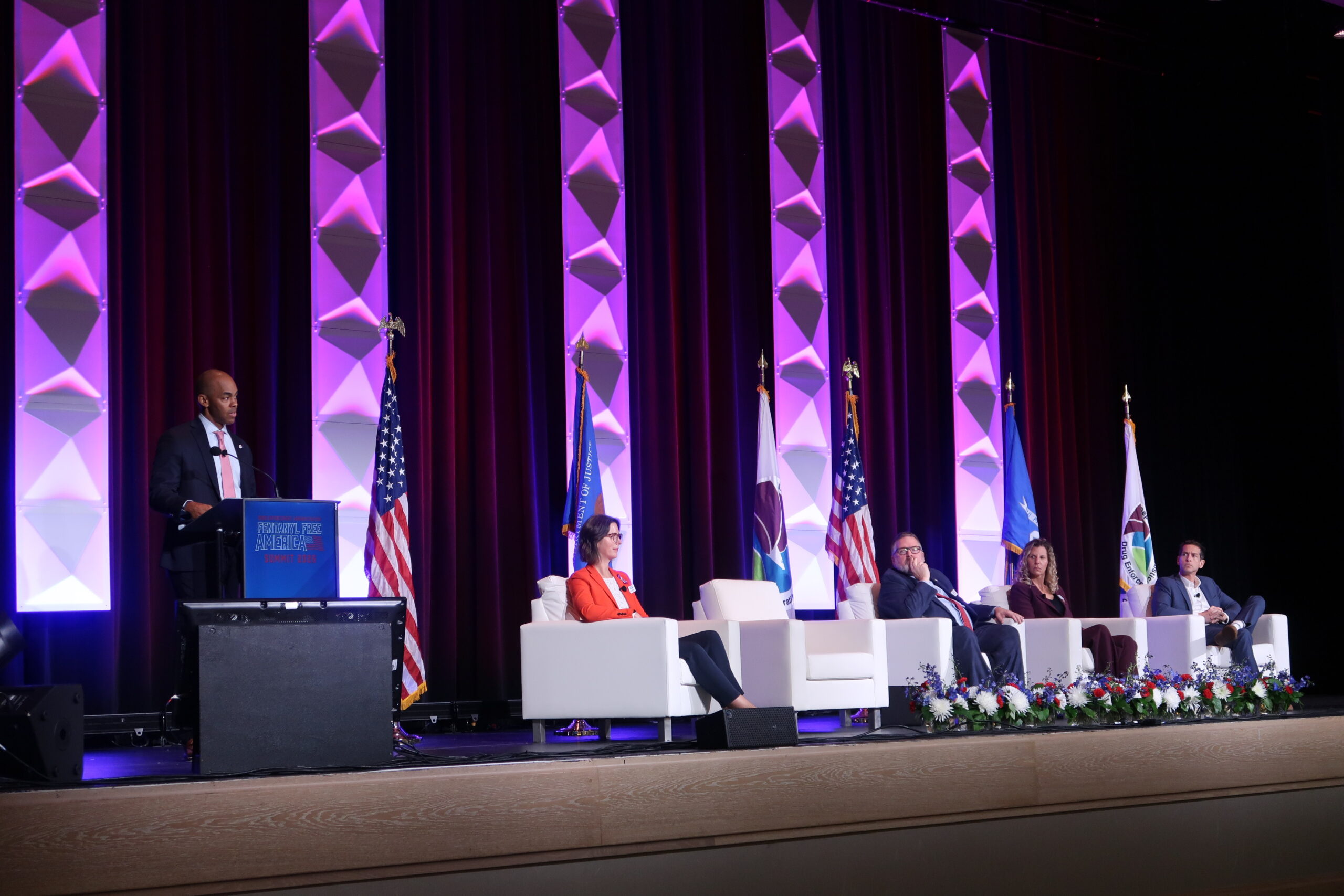
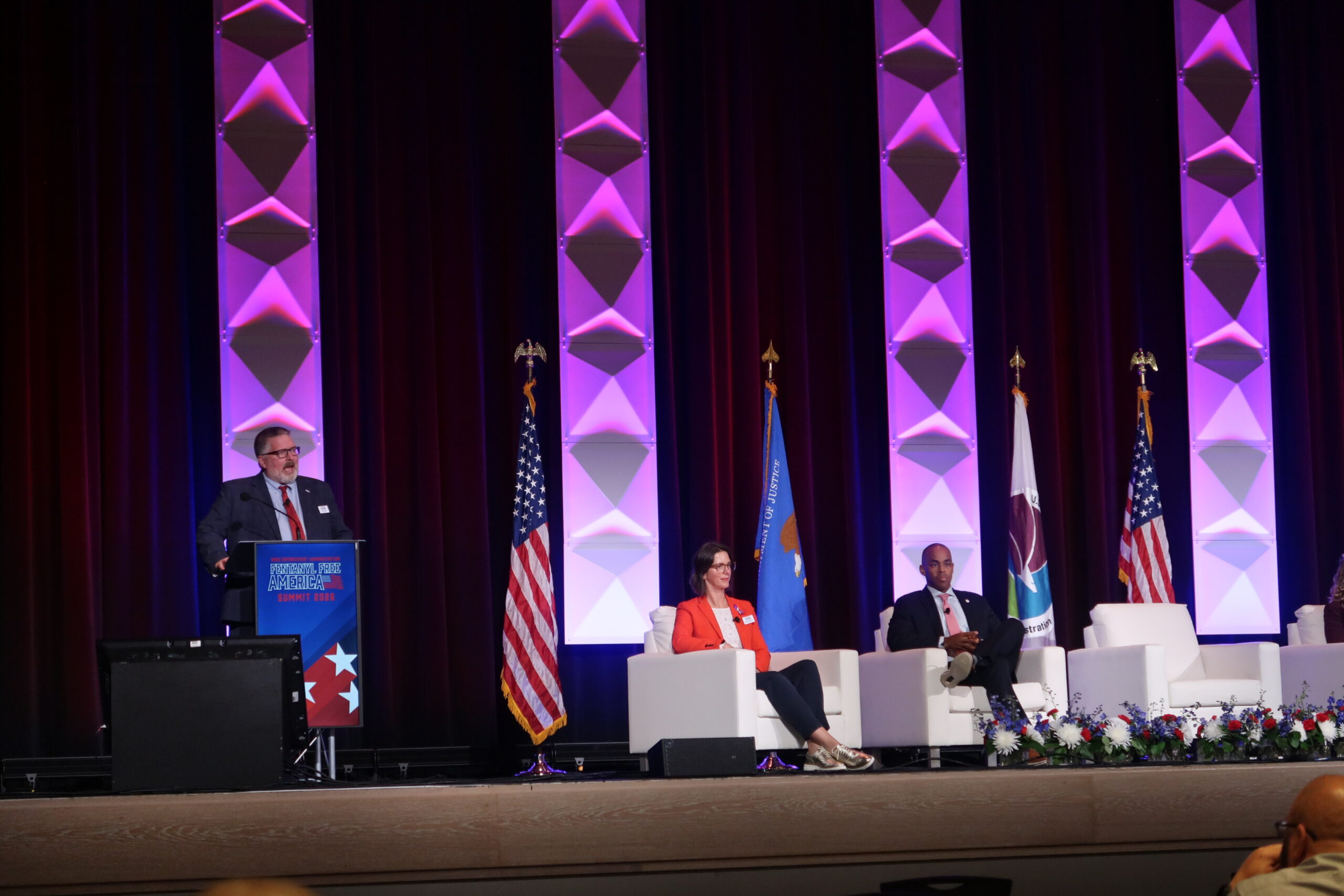
At the inaugural DEA Fentanyl Free America Summit in July, coinciding with CADCA’s Mid-Year Training Institute, leading experts discussed how traffickers are exploiting the internet to reach vulnerable patients and young people. Here’s what coalition leaders need to know about the latest threats.
The numbers are sobering, with less than 4% of online pharmacies being legitimate. That means over 95% are operating illegally in some way, according to Al Carter, Executive Director of the National Association of Boards of Pharmacy (NABP). Between 35,000 and 50,000 active online drug sellers are operating at any given time, and the landscape is shifting faster than law enforcement can track.
Traffickers aren’t hiding on just traditional websites anymore. They’re using social media as storefronts, targeting patients with fake versions of in-demand drugs like GLP-1s, Adderall, and other medications that are in short supply. They’re also making a comeback with controlled substances, particularly Schedule IV drugs and counterfeit versions of pain medications laced with fentanyl.
Thirty-eight percent of Americans know of someone who received substandard or counterfeit prescription drugs online, and 20% of consumers have been deceived into purchasing fake medications.
To fight back, NABP has added more than 45,000 illegal online drug sellers to its Not Recommend List (NRL), with hundreds added monthly. The data is shared with the FDA, DEA, Europol, Health Canada, and major search engines like Bing, which now blocks NRL sites from appearing in its search results.
NABP also offers tools that can help coalitions educate their communities:
- Safe.pharmacy gives patients an easy way to check if an online pharmacy is legitimate. The site also includes a drug disposal locator, helping people safely dispose of unused medications at nearby drop-off sites.
- The .pharmacy top-level domain represents a seal of approval that cannot be faked or stolen. If an online pharmacy uses this domain, it’s legitimate and accredited.
- Pulse Product Verification helps state regulators and federal investigators verify legitimate products in real time. The tool has already identified counterfeit GLP-1 medications, fake HIV drugs, and diverted epilepsy medications
As far as resources for parents and community leaders, the Drug Enforcement Administration’s Kevin Collins recommends “Hidden on Your Kid’s Phone,” a series of five short videos designed to help parents and caregivers protect young people from online drug traffickers. Find them at getsmartaboutdrugs.com/hidden.
Meanwhile, law enforcement continues to focus on identifying and arresting the people behind these rogue accounts. As Stephanie Regas, DEA Chief of Staff, emphasized, shutting down an account often isn’t enough. Without arresting the person running it, traffickers can easily create new accounts and adapt their tactics.
Jim Crotty, Law Enforcement Outreach Manager at Meta, shared insights into how platforms are combatting illegal drug sales. It’s especially challenging because traffickers use slang, emojis, and coded language to evade detection. They even sample legitimate songs about drugs to create authentic-looking advertisements.
Meta’s approach combines strong community standards, robust detection systems, and close cooperation with law enforcement. The platform also provides users with easy ways to report suspicious activity and connects them to trusted support resources.
Recent trafficking trends Meta has identified include sustained demand for fentanyl, increased use of drones for delivery, rising cocaine availability, methamphetamine with higher purity at lower cost, and active cartel recruitment through social media.
This session underscored that online drug trafficking isn’t a law enforcement problem alone. It requires coalition members to:
- Know and share these resources with their communities, particularly parents who may not realize the threats on platforms their kids already use.
- Understand that drug shortages create opportunity for traffickers. When patients can’t fill legitimate prescriptions, they’re vulnerable to scams.
- Recognize that traditional enforcement has limits. Bad actors continuously adapt, shifting platforms and tactics to stay ahead of detection.
- Support community education around safe medication disposal and legitimate pharmacy verification.