How did a single partnership bring together 16 counties across Southern Illinois to advance tobacco prevention at scale? Read on to find out!
CADCA recently hosted the ninth webinar in our 18-part Competencies in Focus webinar series, continuing the deep dive into the competencies that help coalitions function effectively and sustain their work over time. This session focused on the Coalition Structure competency, which centers on how coalitions formalize roles, processes, and systems to guide decision-making and communication.
The webinar featured Zara Petkovic of the Center for Public Health Systems Science at Washington University in St. Louis; Rick Collins, CADCA consultant, co-founder of the Hawai’i Alcohol Policy Alliance, and coalition director for multiple coalitions across Hawai’i; and Kelli Corner, who shared a detailed field example from SITDP.
Petkovic opened the session by walking participants through the broader competency framework. CADCA’s Coalition Competencies span three domains (operations, community, and prevention) and offer a comprehensive picture of what coalitions need to succeed. Coalition structure falls within the operations domain and is defined as formalizing rules and structures to guide communications and decision-making, such as a regular meeting schedule and shared vision and mission.
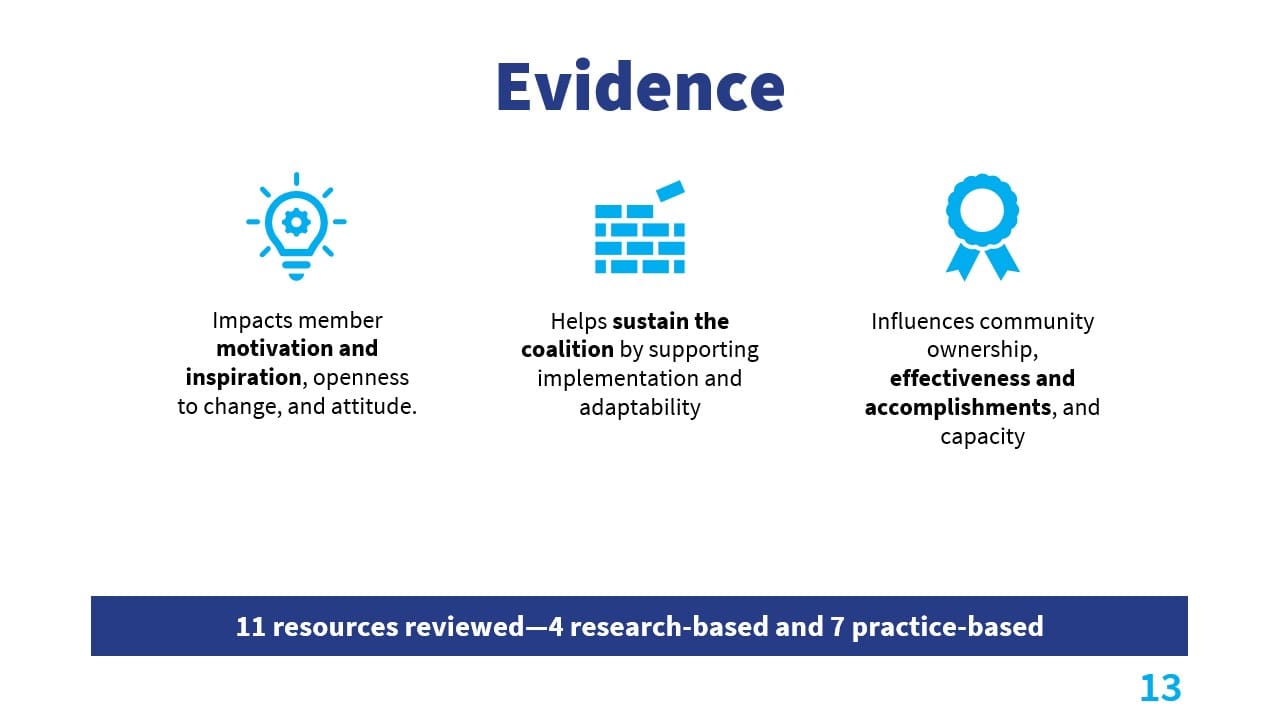
Evidence consistently shows that coalition structure plays an important role in member motivation, openness to change, adaptability, and long-term sustainability. It also influences community ownership of coalition work, effectiveness and accomplishments, and coalition capacity.
Petkovic outlined the key knowledge, skills, and abilities associated with the coalition structure competency. These include understanding community and member values, familiarity with different organizational models such as shared leadership or committees, and knowledge of bylaws and written agreements. Essential skills include clear communication of expectations, summarizing coalition purpose through mission and vision statements, and building networks that allow members to connect with one another and the broader community. Abilities include visioning, coalition governance, day-to-day-operations, and applying community needs and priorities to guide coalition work.
Collins then expanded on how coalition structure shows up in practice and evolves over time. He emphasized that coalition structure is not static; it ebbs and flows as coalitions grow, shift focus, and respond to changing community needs. Thoughtful structure influences how members experience the coalition and whether they feel valued, motivated, and confident that their time and contributions matter.
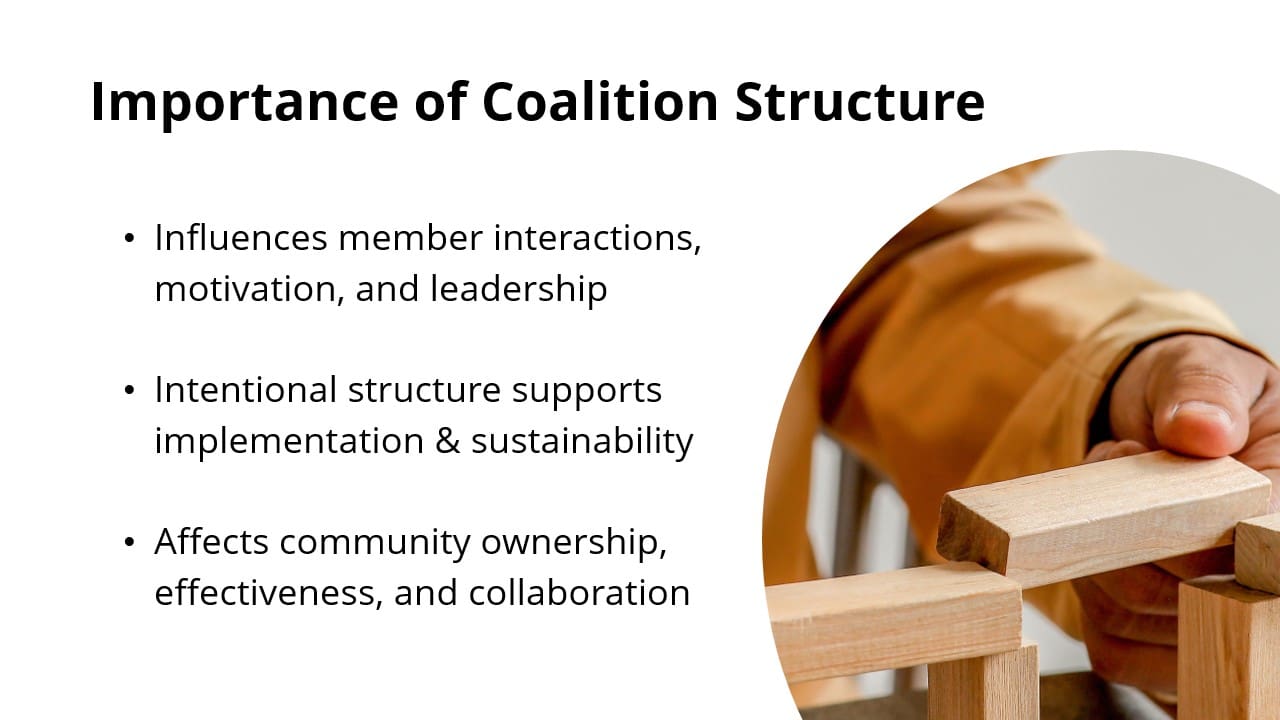
He also highlighted the importance of creating clear processes and leadership opportunities that distribute responsibility beyond paid staff. He discussed practical considerations such as decision-making models, accountability systems, and the use of action teams or workgroups to break large goals into manageable pieces. These structures help coalitions stay organized and maintain momentum, especially when working toward systems-level change.
The session also emphasized that coalition structure is deeply tied to relationships. One-on-one conversations, trust-building, and listening to member values are foundational to creating structures that people want to participate in and sustain over time.
Corner then shared a comprehensive example of coalition structure in action through the SITDP. The partnership operates across a large, rural region and is supported by the Healthy Southern Illinois Delta Network, a long-standing backbone organization that has brought significant funding and coordination capacity to the area.
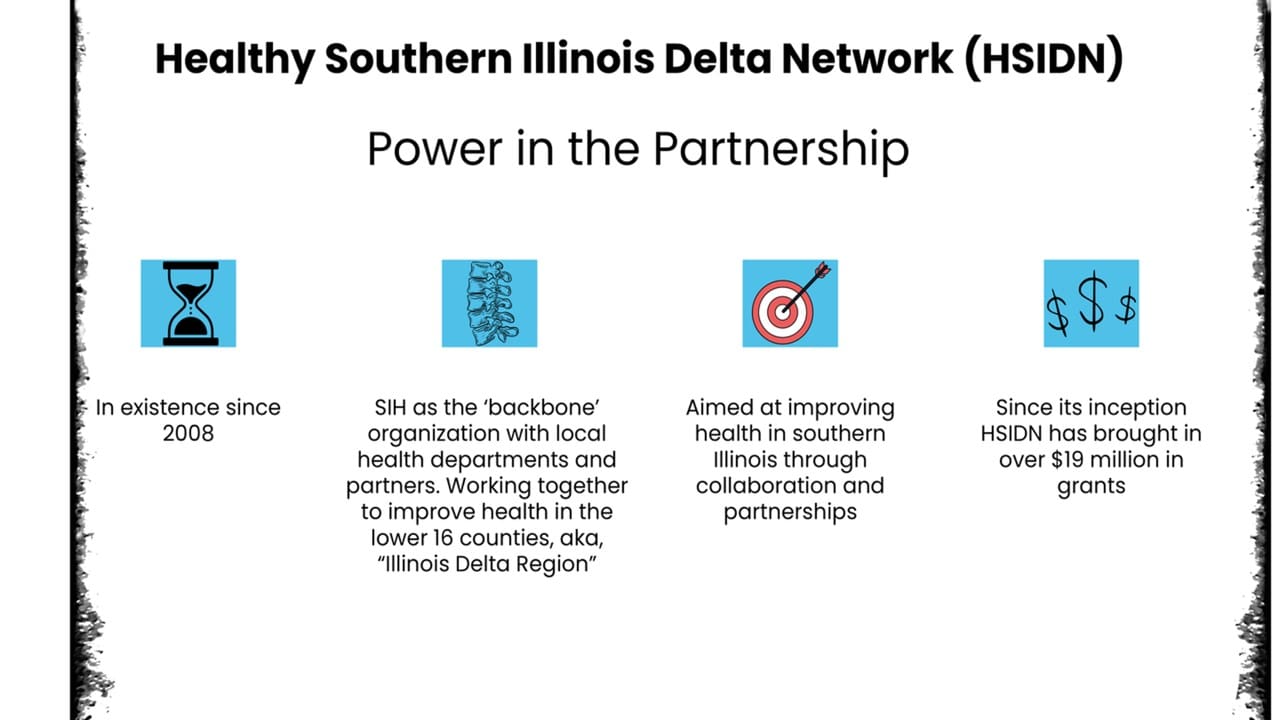
Corner walked participants through how the partnership functions as an umbrella over two regional coalitions representing 16 counties, aligning shared goals while allowing partners to operate within their own contexts. With clear action plans, defined roles, and targeted collaboration, the partnership has been able to conduct extensive needs assessments, environmental scans, regional research, and intervention-focused initiatives.
She highlighted how structure supported the creation of core action teams, engagement of non-traditional partners, and youth leadership through strategy-focused curricula in schools. These efforts contributed to measurable outcomes, including the adoption of more than 30 new tobacco-related interventions across the region over a three-year period.
Corner acknowledged common challenges such as staff turnover, funding silos, and geographic barriers, noting that strong collaboration, shared data, and consistent communication helped the partnership navigate those obstacles and plan for sustainability beyond the life of the grant.
The webinar concluded with practical next steps for coalitions looking to bolster their structure, including breaking work into time-limited action teams, revisiting and operationalizing action plans, expanding leadership opportunities for members, and investing in relationship-building as a foundation for shared ownership.
To learn more about how coalition structure can support your coalition’s effectiveness, watch the full recording here.